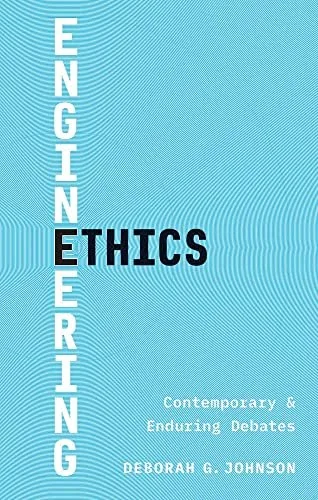
Engineering Ethics: Contemporary and Enduring Debates
By Deborah G. Johnson
About this ebook
Engineering Ethics: Contemporary and Enduring Debates introduces professional responsibility through competing arguments rather than fixed answers. Deborah G. Johnson examines design, risk, safety, workplace loyalty, whistleblowing, sustainability, and emerging technologies for engineering students and practitioners, encouraging readers to consider stakeholders and explain the reasoning behind ethical judgments.
Inside this title
Structured debates on engineering responsibility and professional judgment
Current listed price $9.00Regular price $15.00Digital ebook
Debate gives this textbook its structure. Johnson starts with questions about engineering as a profession and the responsibilities that follow from technical work, then brings alternative positions to bear on decisions made during design, testing, and deployment. Ethical theories provide different ways to examine those positions.
Risk and safety trade-offs, obligations to employers, and responsibilities to the public recur across the discussions. Sustainability and the implications of data-intensive and autonomous technologies connect longstanding professional questions with newer settings. The format supports engineering courses built around participation and reasoned argument. Practicing engineers can also use the cases to reflect on how evidence, uncertainty, and stakeholder interests affect a professional judgment.
Study guide included
Inside Engineering Ethics: Contemporary and Enduring Debates.
A debate-centered introduction to professional responsibility in engineering. Johnson sets competing positions against one another on design choices, risk and safety, loyalty at work, whistleblowing, sustainability, and emerging technologies, asking readers to identify stakeholders and defend ethical judgments with reasons rather than recite fixed answers.
The book treats ethics as argument rather than compliance. It opens with what it means to call engineering a profession and what responsibilities technical work carries, then applies ethical theories to decisions made in design, testing, and deployment. Recurring tensions include balancing risk against benefit, honoring employer obligations while protecting the public, and weighing sustainability and data-intensive or autonomous systems. The debate format supports courses built on participation and is meant to help practicing engineers examine how evidence, uncertainty, and stakeholder interests shape professional judgment.
Engineering as a Profession and Its Duties
Johnson asks what distinguishes engineering from other occupations and what obligations follow from specialized technical knowledge. The debate framing invites readers to weigh claims about public welfare, competence, and professional autonomy instead of accepting a single definition. Students are pushed to explain why a responsibility belongs to engineers and how it might conflict with other duties.
Define what makes engineering a profession
Connect expertise to public obligations
Test competing views of professional autonomy
Topic 1
Ethical Theories as Competing Analytical Tools
Rather than prescribing one method, the text uses utilitarian, duty-based, and virtue-oriented perspectives to illuminate the same problem from different angles. Readers compare what each theory highlights and overlooks when applied to technical work. The aim is reasoned judgment: choosing a defensible position and showing how evidence supports it.
Compare consequentialist and duty-based reasoning
Apply virtue questions to engineering conduct
Show where theories reach different conclusions
Topic 2
Design, Testing, and Deployment Decisions
Ethical questions surface long before a product reaches users. The book traces choices about specifications, testing regimes, and release timing, showing how seemingly technical decisions distribute benefits and harms. Debates focus on who is consulted, what uncertainty is acceptable, and how accountability is assigned once a system is deployed.
Trace values embedded in design specifications
Examine testing choices as ethical decisions
Assign accountability across deployment stages
Topic 3
Risk, Safety, and Acceptable Trade-offs
Safety is treated as a matter of judgment under uncertainty rather than a box to check. Competing positions address how much risk is tolerable, who bears it, and how costs and benefits should be weighed. Readers consider how evidence, probability, and consent shape defensible decisions about hazards.
Weigh tolerable risk against perceived benefit
Ask who bears a hazard's burden
Use evidence and uncertainty in safety arguments
Topic 4
Loyalty, Dissent, and Whistleblowing
Obligations to an employer can collide with duties to the public. The text sets arguments for organizational loyalty against arguments for disclosure when serious harm is possible, examining what justifies going outside normal channels. Readers assess thresholds, motives, and the consequences that follow for individuals and institutions.
Distinguish loyalty from unquestioning compliance
Identify thresholds that justify disclosure
Consider consequences for dissenters and organizations
Topic 5
Sustainability and Emerging Technologies
Longstanding professional questions reappear in new settings: environmental limits, data-intensive systems, privacy, and autonomous operation. The debates ask how engineers should weigh distant or diffuse harms and how responsibility is distributed when systems act with limited human oversight. Position-taking is expected, with reasons and stakeholder analysis.
Connect sustainability to engineering choices
Examine privacy in data-intensive systems
Debate accountability for autonomous operation
Topics 6–7
Topic map
Professional identity and public dutyTopic 1
Moral frameworks for technical workTopic 2
Ethics in design and testingTopic 3
Risk, safety, and stakeholder burdenTopic 4
Loyalty, dissent, and disclosureTopic 5
Sustainability and environmental limitsTopic 6
Privacy, autonomy, and emerging systemsTopic 7
Key takeaways
Defend ethical positions with reasons, evidence, and stakeholder analysis rather than appeals to fixed rules.
Weigh who benefits and who bears risk before accepting any technical trade-off as reasonable.
Public welfare can outweigh workplace loyalty when credible harm justifies disclosure to regulators or the public.
Engineering students in discussion-based ethics courses, instructors seeking debatable cases, and practicing engineers who want to reflect on professional responsibility, risk, and emerging technology in their daily work.
Topics covered
engineering ethics
professional responsibility
risk and safety
workplace whistleblowing
engineering sustainability
stakeholder analysis
autonomous systems
Deborah Johnson
Questions about this ebook.
Edition, audience, and study-guide details at a glance.
What is Engineering Ethics: Contemporary and Enduring Debates about?
Engineering Ethics: Contemporary and Enduring Debates introduces professional responsibility through competing arguments rather than fixed answers. Deborah G. Johnson examines design, risk, safety, workplace loyalty, whistleblowing, sustainability, and emerging technologies for engineering students and practitioners, encouraging readers to consider stakeholders and explain the reasoning behind ethical judgments.
Who is Engineering Ethics: Contemporary and Enduring Debates for?
Engineering students in discussion-based ethics courses, instructors seeking debatable cases, and practicing engineers who want to reflect on professional responsibility, risk, and emerging technology in their daily work.
Does this page include a study guide?
Yes. This page includes an original study guide with six thematic sections, key takeaways, and a topic map for structured reading.