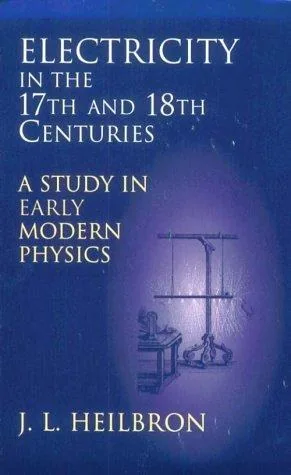
J. L. Heilbron's Electricity in the 17th and 18th Centuries traces the development of electrical science into a quantitative branch of physics. This scholarly history examines experiments, instruments, theories, and institutions, offering historians, physics students, and researchers an account of how early modern investigators defined and studied electrical phenomena.
Inside this title
Electrical experimentation and theory across the seventeenth and eighteenth centuries
Current listed price $30.99Regular price $79.00Digital ebook
Heilbron reconstructs electrical inquiry through the categories, problems, and methods used by seventeenth- and eighteenth-century physicists. Exploratory observations gradually become organized into programs of experiment and explanation, allowing the book to examine the development of a scientific field across two centuries.
Measurement and instrumental precision receive attention alongside theories of electrical fluids, matter, force, and action at a distance. Institutional influences help explain which questions investigators pursued and how claims gained acceptance. The result is a history concerned with conceptual and methodological change as well as discovery. It is suited to readers studying early modern science, the history of experimental practice, and the emergence of quantitative physics.
Study guide included
Inside Electricity in the 17th and 18th Centuries.
J. L. Heilbron's Electricity in the 17th and 18th Centuries follows electrical inquiry as it became a quantitative branch of physics. The history weighs experiments, instruments, theories, and institutions together, giving historians, physics students, and researchers an account of how early modern investigators defined electrical phenomena and turned curiosity into organized research.
Heilbron reconstructs electrical work through the categories, problems, and methods its practitioners actually used. Exploratory observations slowly harden into programs of experiment and explanation, letting the book trace a field's development across two centuries rather than isolate a few famous discoveries. Measurement and instrumental precision are examined next to theories of electrical fluids, matter, force, and action at a distance. Institutional pressures help explain which questions were pursued and how claims won acceptance. The result is a history of conceptual and methodological change as much as of findings, suited to readers interested in early modern science, experimental practice, and the emergence of quantitative physics.
Electrical Experiment and Instrumentation
Experiments and the instruments that made them possible are central to the account. The book examines how investigators produced, stored, and observed electrical effects, treating apparatus as part of the intellectual work rather than as background.
Examine early electrical experiments
Understand the role of instruments
Relate apparatus to observation
Topic 1
Measurement and Quantitative Method
Precision and measurement turn phenomena into quantities. Heilbron follows the growth of quantitative practice, showing how better measurement changed what could be claimed. This shift is presented as a condition for physics to mature as a field.
Trace the growth of measurement
Assess instrument precision
Connect precision to quantitative claims
Topic 2
Theories of Electrical Fluids
Fluid theories gave early investigators a way to organize observations. The text examines competing accounts of electrical matter and how they guided experiment. These theories are treated as working frameworks rather than mere errors.
Compare theories of electrical fluids
Relate fluid theories to experiments
Note how frameworks guided inquiry
Topic 3
Matter, Force, and Action at a Distance
Electrical research raised broader questions about matter and force. The book places debates over action at a distance within electrical inquiry, showing how specific findings fed general physical argument. Conceptual commitments shaped what investigators accepted.
Examine debates about force
Consider action at a distance
Connect electrical findings to physical theory
Topic 4
Institutions and the Direction of Inquiry
Institutions influence which questions get asked and whose claims count. Heilbron examines the settings in which electrical work was pursued and how recognition and resources shaped the field. This adds a social dimension to the intellectual history.
Identify institutional settings
Relate patronage and recognition to research
Explain how claims gained acceptance
Topic 5
Conceptual and Methodological Change
The book's larger argument concerns change over time. Exploratory observation gives way to organized programs, and methods are revised as problems demand. The result is a history of how a science defines its objects and refines its approach.
Trace observation into organized research
Follow methodological refinement
See how a field defines its objects
Topics 6–7
Topic map
Electrical experiments and instrumentsTopic 1
Measurement, precision, and quantitative practiceTopic 2
Theories of electrical fluidsTopic 3
Debates over matter, force, and action at a distanceTopic 4
Institutional settings and scientific programsTopic 5
From exploratory observation to organized researchTopic 6
The emergence of quantitative physicsTopic 7
Key takeaways
Electrical science advanced through instrumentation and measurement as much as through new ideas.
Theories of fluids and action at a distance guided experiments even while they were later revised.
Institutional settings helped determine which electrical questions were pursued and accepted.
Historians of science, physics students, and researchers interested in early modern experiment, instrumentation, and the emergence of quantitative physics across the seventeenth and eighteenth centuries.
Topics covered
history of electricity
early modern physics
electrical fluids
scientific instruments
action at a distance
quantitative physics
J. L. Heilbron
Questions about this ebook.
Edition, audience, and study-guide details at a glance.
What is Electricity in the 17th and 18th Centuries about?
J. L. Heilbron's Electricity in the 17th and 18th Centuries traces the development of electrical science into a quantitative branch of physics. This scholarly history examines experiments, instruments, theories, and institutions, offering historians, physics students, and researchers an account of how early modern investigators defined and studied electrical phenomena.
Who is Electricity in the 17th and 18th Centuries for?
Historians of science, physics students, and researchers interested in early modern experiment, instrumentation, and the emergence of quantitative physics across the seventeenth and eighteenth centuries.
Does this page include a study guide?
Yes. This page includes an original study guide with six thematic sections, key takeaways, and a topic map for structured reading.