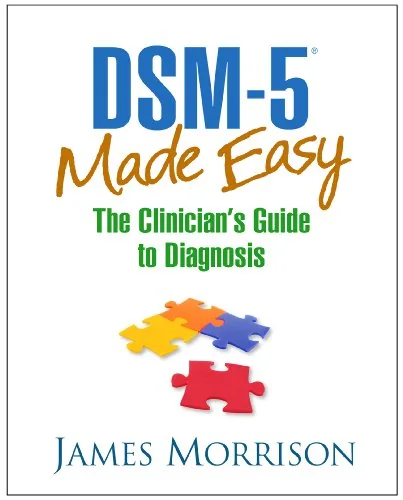
DSM-5 Made Easy explains diagnostic categories and clinical reasoning associated with the fifth edition of the DSM. James Morrison uses criteria summaries, differential diagnosis discussions, and patient vignettes for mental health trainees and clinicians studying how symptoms, specifiers, severity, and comorbidity contribute to a diagnostic formulation.
Inside this title
Diagnostic categories and criteria associated with the original DSM-5
Current listed price $28.00Regular price $63.00Digital ebook
Organized by related groups of disorders, this 2014 guide begins chapters with an orientation to their diagnostic content. Criteria summaries and explanatory discussions then connect the categories with the kinds of presentations clinicians encounter in an interview.
Case vignettes illustrate the reasoning involved in distinguishing similar disorders and considering more than one diagnosis. Specifiers, levels of severity, cultural context, and the relationship between diagnosis and treatment planning broaden the discussion. The book accompanies study of the original DSM-5 framework and reflects that edition's terminology and categories. It is useful for learners who want examples and explanatory prose alongside diagnostic definitions as they develop a more organized approach to assessing clinical information.
Study guide included
Inside DSM-5 Made Easy: The Clinician's Guide to Diagnosis.
Morrison pairs the DSM-5 categories with the reasoning clinicians actually perform. Criteria summaries open each chapter, vignettes show how presentations look in an interview, and differential diagnosis, specifiers, severity, comorbidity and cultural context are discussed together. It is a 2014 companion to the original manual.
The guide is organized by related groups of disorders, each introduced with an orientation to its diagnostic content. Criteria summaries are followed by explanatory prose that connects definitions to recognizable clinical pictures. Vignettes carry the reasoning: distinguishing similar disorders, weighing more than one diagnosis, noticing what specifiers add. Severity levels, comorbidity and cultural context are treated as part of formulation rather than footnotes, and the link to treatment planning stays in view. Because it tracks original DSM-5 terminology, it should be read alongside that edition rather than newer revisions.
Orientation before criteria
Each chapter opens by describing what belongs in the diagnostic group before the criteria are listed. That orientation gives readers a frame for the definitions, so individual symptoms are read as parts of a pattern instead of as a checklist to be tallied.
Chapters open with a group overview
Framing precedes the criteria list
Symptoms are read as patterns
Topic 1
Criteria summaries as a scaffold
The criteria are condensed and then explained. Summaries make the required features visible at a glance, while the surrounding prose adds the qualifications that a bare list omits, including duration, impairment and exclusions.
Summaries highlight required features
Prose adds duration and exclusion detail
Impairment is part of the threshold
Topic 2
Vignettes and clinical reasoning
Case examples show how a category appears in an actual interview rather than in a definition. Following a vignette means noticing which details matter, which are incidental, and where the presentation departs from the textbook picture.
Cases show categories in context
Relevant detail must be separated from noise
Atypical features are still informative
Topic 3
Differential diagnosis
Distinguishing similar disorders is treated as the central skill. The text compares overlapping presentations and identifies the features that separate them, which is more useful than memorizing categories in isolation.
Similar disorders share surface features
Discriminating features drive the decision
Comparison replaces isolated memorization
Topic 4
Specifiers, severity and comorbidity
A diagnosis is rarely complete at the category level. Specifiers, severity ratings and additional conditions shape the clinical picture, and the guide treats them as information that changes what the formulation says.
Specifiers refine a category
Severity affects the clinical picture
Comorbidity is common, not exceptional
Topic 5
Culture, treatment and edition context
Cultural context is considered part of how symptoms are expressed and understood. The book also connects diagnosis to treatment planning and remains tied to the original DSM-5, so readers should check terminology against the manual they are using.
Culture shapes expression and interpretation
Diagnosis informs treatment planning
Terminology follows the original DSM-5
Topics 6–7
Topic map
Orientation to the DSM-5 FrameworkTopic 1
Criteria Summaries and Chapter StructureTopic 2
Clinical VignettesTopic 3
Differential DiagnosisTopic 4
Specifiers, Severity and ComorbidityTopic 5
Cultural ContextTopic 6
Diagnosis and Treatment PlanningTopic 7
Key takeaways
Read the group orientation before the criteria; it makes the list intelligible.
Practice differential reasoning on the vignettes instead of memorizing categories alone.
Check the edition: this guide follows original DSM-5 terminology, not later revisions.
Mental health trainees, early-career clinicians, and practitioners who want worked examples and explanatory prose alongside DSM-5 diagnostic definitions.
Topics covered
DSM-5 made easy
James Morrison
diagnostic criteria
differential diagnosis
clinical vignettes
specifiers and severity
cultural context diagnosis
treatment planning
Questions about this ebook.
Edition, audience, and study-guide details at a glance.
What is DSM-5 Made Easy: The Clinician's Guide to Diagnosis about?
DSM-5 Made Easy explains diagnostic categories and clinical reasoning associated with the fifth edition of the DSM. James Morrison uses criteria summaries, differential diagnosis discussions, and patient vignettes for mental health trainees and clinicians studying how symptoms, specifiers, severity, and comorbidity contribute to a diagnostic formulation.
Who is DSM-5 Made Easy: The Clinician's Guide to Diagnosis for?
Mental health trainees, early-career clinicians, and practitioners who want worked examples and explanatory prose alongside DSM-5 diagnostic definitions.
Does this page include a study guide?
Yes. This page includes an original study guide with six thematic sections, key takeaways, and a topic map for structured reading.