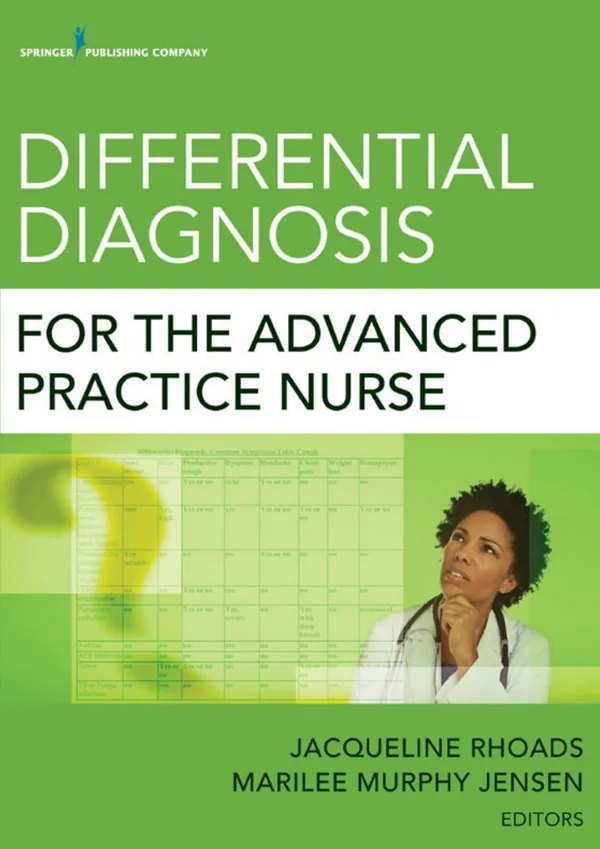
Differential Diagnosis for the Advanced Practice Nurse presents symptom-based clinical reasoning for APRN students and practitioners. Rhoads and Jensen examine 38 common presentations, linking focused histories and examination findings with possible diagnoses, diagnostic testing, and urgent warning signs. Case studies illustrate how these elements contribute to a prioritized differential.
Inside this title
Thirty-eight common symptoms organize the clinical reasoning discussion
Current listed price $23.99Regular price $53.00Digital ebook
Each symptom provides the starting point for a structured inquiry into possible causes. Rather than presenting diagnoses as isolated lists, the book follows the reasoning from patient history through physical examination and relevant investigations. Examples include chest pain, headache, and abdominal pain in primary and acute care settings.
Attention to red flags places potentially urgent conditions within the broader differential. Case studies show how particular findings can change the relative importance of competing explanations. Written around advanced practice nursing, the text can support coursework, clinical discussions, and review of assessment reasoning, with its symptom-by-symptom organization allowing readers to focus on a particular presentation.
Study guide included
Inside Differential Diagnosis for the Advanced Practice Nurse.
A symptom-first guide to clinical reasoning for advanced practice nurses. Rhoads and Jensen work through 38 common presentations, connecting focused history and examination findings with possible diagnoses, diagnostic testing, and urgent warning signs. Case studies show how a prioritized differential takes shape in primary and acute care.
Each symptom becomes the entry point for a structured inquiry. Rather than listing diagnoses in isolation, the book follows reasoning from patient history through physical examination and relevant investigations. Chest pain, headache, and abdominal pain illustrate how the same method applies across primary and acute care settings. Red flags are kept inside the differential, so potentially urgent conditions are not separated from ordinary explanations. Case studies show particular findings shifting the relative importance of competing possibilities. The symptom-by-symptom organization lets readers turn directly to a presentation for coursework, clinical discussion, or review of assessment reasoning.
Symptom-Based Reasoning
The book starts from the symptom a patient reports. Thirty-eight common presentations organize the material, each becoming a problem to investigate rather than a label to confirm. This structure lets readers focus on the reasoning attached to a particular complaint.
Thirty-eight common presentations organize the text
Symptoms treated as problems to investigate
Each presentation can be studied on its own
Topic 1
Focused History and Physical Examination
History taking and examination are presented as the first sources of diagnostic information. Focused questions and physical findings narrow the field before testing is considered. The text keeps these steps visible instead of jumping straight to a diagnosis.
Focused history as an early filter
Examination findings that change the picture
Assessment steps kept explicit
Topics 2–3
Building a Prioritized Differential
Possible diagnoses are arranged by likelihood and urgency rather than listed flatly. The book shows how findings raise or lower the importance of competing explanations. The result is a differential that guides the next clinical decision.
Diagnoses ordered by likelihood and urgency
Findings shift relative importance
A prioritized list guides next steps
Topic 4
Diagnostic Testing and Investigation
Testing is placed after reasoning, not before it. The text connects particular investigations with the possibilities they are meant to confirm or exclude. This keeps testing tied to the differential rather than treated as a routine add-on.
Tests selected to address specific possibilities
Results interpreted within the differential
Investigation follows clinical reasoning
Topic 5
Red Flags and Urgent Conditions
Urgent warning signs are incorporated into the differential. Potentially dangerous conditions are not left outside the ordinary list, where they might be missed. Attention to red flags helps readers decide when a presentation needs urgent action.
Red flags kept inside the differential
Potentially urgent conditions made visible
Findings that signal escalation
Topic 6
Case Studies and Applied Reasoning
Case studies show the method in motion. Chest pain, headache, and abdominal pain demonstrate how history, examination, and testing combine in primary and acute care. Readers can follow how a particular finding changes the weight of competing explanations.
Cases across primary and acute care
Chest pain, headache, and abdominal pain
Findings used to revise the differential
Topics 7–8
Topic map
Symptom-based clinical reasoning for APRN practiceTopic 1
The focused patient historyTopic 2
Physical examination findingsTopic 3
Prioritizing possible diagnosesTopic 4
Diagnostic testing and investigationTopic 5
Urgent warning signs and red flagsTopic 6
Chest pain, headache, and abdominal pain examplesTopic 7
Case studies in primary and acute careTopic 8
Key takeaways
A symptom is a starting point for structured inquiry, not a diagnosis in itself.
History and examination should narrow possibilities before testing begins.
Red flags belong inside the differential so urgent conditions stay visible.
Advanced practice nursing students and practitioners, plus educators who want a symptom-organized reference for clinical reasoning, coursework, and review.
Topics covered
differential diagnosis
advanced practice nurse
APRN clinical reasoning
symptom-based assessment
focused history
diagnostic testing
red flags
case studies
Questions about this ebook.
Edition, audience, and study-guide details at a glance.
What is Differential Diagnosis for the Advanced Practice Nurse about?
Differential Diagnosis for the Advanced Practice Nurse presents symptom-based clinical reasoning for APRN students and practitioners. Rhoads and Jensen examine 38 common presentations, linking focused histories and examination findings with possible diagnoses, diagnostic testing, and urgent warning signs. Case studies illustrate how these elements contribute to a prioritized differential.
Who is Differential Diagnosis for the Advanced Practice Nurse for?
Advanced practice nursing students and practitioners, plus educators who want a symptom-organized reference for clinical reasoning, coursework, and review.
Does this page include a study guide?
Yes. This page includes an original study guide with six thematic sections, key takeaways, and a topic map for structured reading.