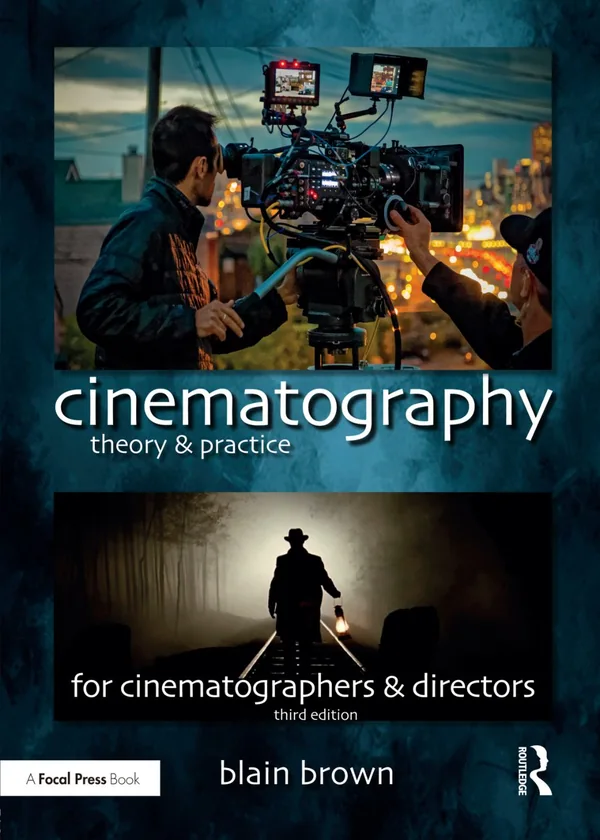
Cinematography: Theory and Practice, 3rd Edition connects technical image-making with the choices that shape visual storytelling. Blain Brown examines lighting, color, lenses, composition, movement, continuity, and digital workflows. Film students, cinematographers, and directors can study how equipment and production methods contribute to a scene's mood, rhythm, and narrative meaning.
Inside this title
Light, color, optics, and exposure connected with narrative choices
Current listed price $34.99Regular price $115.00Digital ebook
Blain Brown treats the image as both a technical construction and a storytelling decision. Light, color temperature, lens selection, exposure, depth of field, and framing establish the basis for examining how a shot communicates. Camera movement and continuity connect individual images with the rhythm and coherence of a sequence.
The third edition extends these principles into digital workflows, including Log and RAW recording, lookup tables, and color grading. Lighting setups, grip considerations, and crew communication bring production practice into the discussion. Students and filmmakers can use the text to connect decisions made during preparation and filming with the visual character of the finished work.
Study guide included
Inside Cinematography: Theory and Practice, 3rd Edition.
Cinematography: Theory and Practice, third edition, joins technical image-making to the choices that shape visual storytelling. Blain Brown covers lighting, color, lenses, composition, movement, continuity, and digital workflows, so film students, cinematographers, and directors can see how equipment and production practice affect a scene's mood, pace, and narrative sense.
Visual language opens the book, followed by lenses, storytelling, and coverage before color, cameras, measurement, exposure, and image control. Later chapters take up lighting equipment, focus, camera movement, coordination on set, and the handling of recorded files. The practical thread is turning a narrative aim into choices a crew can execute, monitor, and preserve from shot to shot, since a change in framing or exposure ripples through the set and the edit. Craft decisions are treated as answers to storytelling questions, and ideas are tested with the camera rather than accepted on paper.
Framing, attention, and dramatic intent
The frame decides what is shown and what the viewer must supply. Line, contrast, balance, and empty space steer the eye or create unease, while overlap and relative size imply depth. Because composition unfolds over time, a strong frame anticipates where attention will go as actors move or objects enter, and it can share a character's discovery or withhold what that character cannot know.
Let the frame choose what is seen
Anticipate movement inside the shot
Tie placement to dramatic purpose
Writing with Motion · Visual Language · Visual Storytelling
Perspective, lens, and plane of focus
Focal length sets the angle of view for a format, but perspective belongs to camera position. Keeping subject size constant while changing lens usually means moving the camera, which alters foreground-to-background relationships. Aperture, focus distance, focal length, format, and final presentation determine depth of field, and a planned focus pull can move attention from one object to another.
Separate angle of view from camera position
Compare framings made with different lenses
Mark positions for a focus pull
Language of the Lens · Optics & Focus
Coverage, geography, and the cut
A master shot establishes positions, entrances, movement, and screen direction; tighter shots supply reactions and detail the wide view cannot stress. Inserts and cutaways add information or cover a transition. The action axis protects eyelines and direction, and matching movement, props, and timing smooths cuts, especially when action overlaps. A deliberate axis crossing needs an intermediate view or a visible move.
Establish geography before changing scale
Give each shot an editorial task
Check action and eyelines at the cut
Coverage & Continuity · p. 57
Signal, exposure, and the viewing path
Sensor design and camera processing turn light into recorded values, while exposure, dynamic range, and noise limit what can be recovered afterward. A meter reports light or reflected levels, and a waveform shows how values are distributed. Colour balance, encoding, viewing transforms, and grading do different jobs, so camera, monitor path, and postproduction interpretation should be tested as one chain and documented.
Direction, quality, and intensity determine how faces and spaces read. A large source softens the transition into shadow; a small apparent source sharpens it. Reflectors, diffusion, flags, and negative fill redirect light or reduce what returns. Colour temperature, camera balance, and mixed sources shape the palette, and a visible practical can motivate a light even when a separate unit supplies the exposure.
Design the shape of the light
Pick tools for the result you need
Judge color in its context
Color · The Tools of Lighting · Lighting Basics
Camera moves and set discipline
A camera may pan, tilt, track, or be carried by hand, and each choice can follow action, disclose something new, or alter how the viewer relates to the space; a zoom reframes without changing position. Set work depends on communication among camera, lighting, production, and post. Slates and logs tie takes to sound, settings, and editorial notes, while digital workflow adds verification, backup, and consistent naming so an intended image survives past the monitor.
Choose movement for what it changes
Plan the start and end of the move
Confirm the handoff past the monitor
Camera Movement · Set Operations · Data Management
Chapter and section map
Writing with Motionp. 1
Language of the Lensp. 29
Coverage & Continuityp. 57
Cameras & Sensorsp. 125
Exposure and Image Controlpp. 171, 215
The Tools of Lighting and Lighting Basicspp. 237, 259
Camera Movement and Set Operationspp. 301, 323
Data Managementp. 365
Key takeaways
Set camera position for spatial relationships, then choose focal length for the framing available there.
Give every coverage shot a purpose in the edit and check action and eyelines across cuts.
Test recording, monitoring, and data handoff together before the shoot begins in earnest.
Film students, working cinematographers, and directors who want to connect visual storytelling decisions with the technical practices of production, lighting, camera work, and postproduction data handling.
Topics covered
visual storytelling
lens selection
coverage and continuity
exposure and metering
color grading
lighting design
camera movement
digital workflow
Questions about this ebook.
Edition, audience, and study-guide details at a glance.
What is Cinematography: Theory and Practice, 3rd Edition about?
Cinematography: Theory and Practice, 3rd Edition connects technical image-making with the choices that shape visual storytelling. Blain Brown examines lighting, color, lenses, composition, movement, continuity, and digital workflows. Film students, cinematographers, and directors can study how equipment and production methods contribute to a scene's mood, rhythm, and narrative meaning.
Which edition of Cinematography: Theory and Practice, 3rd Edition is this?
This listing is for the 3rd edition. Check the title, ISBN, and book details above before ordering, especially if your course or reading list names a specific edition.
Who is Cinematography: Theory and Practice, 3rd Edition for?
Film students, working cinematographers, and directors who want to connect visual storytelling decisions with the technical practices of production, lighting, camera work, and postproduction data handling.
Does this page include a study guide?
Yes. This page includes an original study guide with six thematic sections, key takeaways, and a chapter and section map for structured reading.