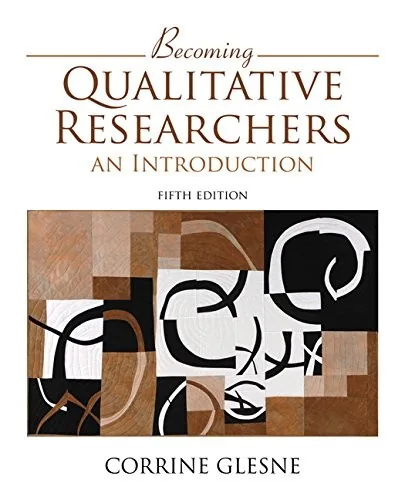
Becoming Qualitative Researchers: An Introduction, 5th Edition
By Corrine Glesne
About this ebook
Becoming Qualitative Researchers, 5th Edition, introduces the design, conduct, and writing of qualitative studies. Corrine Glesne guides beginning researchers through questions, ethics, interviews, observation, coding, interpretation, and representation. Examples from education and the social sciences connect methodological choices with reflexivity and the responsibilities of working with participants.
Inside this title
Research questions, study design, proposals, and ethics review
Current listed price $31.99Regular price $85.00Digital ebook
Qualitative inquiry requires researchers to make interpretive choices throughout a study. Corrine Glesne introduces this work from the formation of a research question and proposal through fieldwork and final writing. Literature review, research design, and institutional review processes establish a framework for approaching participants and gathering evidence.
Interviews, participant observation, and document analysis lead into coding, thematic analysis, and interpretation. Reflexive questions encourage readers to examine their role in producing knowledge and representing other people's experiences. Exercises and examples from several disciplines connect the methods with practical research decisions. This fifth edition is suited to introductory research courses and to students planning a first qualitative project in education or related social sciences.
Study guide included
Inside Becoming Qualitative Researchers: An Introduction, 5th Edition.
Qualitative research is a series of interpretive choices, made from the first question through the final page. Corrine Glesne guides beginning researchers through design, ethics, fieldwork, coding, and writing, keeping reflexivity in view so that the researcher's own position becomes part of the inquiry rather than a blind spot.
The fifth edition introduces the design, conduct, and writing of qualitative studies. Glesne begins with the formation of a research question and proposal, then covers literature review, research design, and institutional review as the framework for approaching participants. Interviews, participant observation, and document analysis lead into coding, thematic analysis, and interpretation. Reflexive questions recur throughout, asking readers to examine their role in producing knowledge and in representing other people's experience. Writing strategies consider participant voices and the ethics of portrayal. Exercises and examples drawn from education and the social sciences connect method with the decisions a real study demands, making the text suited to introductory courses and first projects.
From question to proposal
The work starts with a question worth pursuing and a proposal that makes the study intelligible to others. Glesne treats design as an argument connecting question, literature, and method, rather than a form to complete. Institutional review enters here too, framing the researcher's obligations before any participant is approached and setting the ethical terms of the project.
Frame a question worth pursuing
Connect question, literature, and method
Plan ethics before fieldwork
Topic 1
Approaching participants with care
Fieldwork depends on relationships with people who agree to be studied. The book treats access, trust, and reciprocity as practical concerns with ethical weight, since participants offer time and access that carry obligations. How a researcher enters a setting and explains their purpose shapes what can be learned and what should not be pursued.
Treat access as a relationship
Explain your purpose honestly
Respect what participants offer
Topic 2
Interviewing and participant observation
Interviews and participant observation are presented as complementary ways of gathering evidence. An interview can explore how someone understands their experience, while observation shows what happens in a setting that talk may not capture. Glesne attends to the craft of each: how questions are formed, how a fieldworker takes part without distorting the scene unduly.
Use interviews to explore meaning
Let observation show practice
Attend to the craft of each
Topic 3
Documents and other evidence
Document analysis extends the range of material a qualitative study can use. Records, texts, and artefacts offer evidence that is not produced for the researcher, which makes them valuable and also raises questions about context and authorship. The book treats documents as sources to be interpreted carefully, not as transparent windows onto what happened.
Read documents in context
Ask who produced a text
Treat evidence as interpreted
Topic 4
Coding and thematic interpretation
Coding is introduced as a way of organising material so that patterns can be noticed and examined. The book moves from initial codes to themes and then to interpretation, where the researcher explains what the patterns may mean. The process is iterative: analytic ideas send the researcher back to the data, and the data keep correcting the ideas.
Organise material to see patterns
Move from codes to themes
Let data correct interpretation
Topic 5
Reflexivity and representing others
Reflexive practice asks researchers to examine how their own position shapes the knowledge they produce. Representation raises a further question: how are participants shown in the final text, and whose interpretation carries authority? Glesne keeps both concerns active through the writing stage, where choices about voice and portrayal have consequences for the people studied.
Examine your role in knowledge
Ask how participants are portrayed
Take responsibility for representation
Topic 6
Topic map
Research Questions and ProposalsTopic 1
Ethics and Institutional ReviewTopic 2
Interviewing and ObservationTopic 3
Document AnalysisTopic 4
Coding and Thematic AnalysisTopic 5
Reflexivity and WritingTopic 6
Key takeaways
Design is an argument linking question, literature, and method, not a form to be completed before fieldwork.
Interviews and observation answer different questions, so the choice of evidence should follow what you want to know.
Reflexivity and careful representation keep the researcher accountable to the people whose experience is being studied.
Students new to qualitative inquiry, including those in education and the social sciences who are planning a first project and want guidance on design, fieldwork, analysis, and writing.
Topics covered
qualitative research
research design
interviewing techniques
participant observation
thematic analysis
research ethics
researcher reflexivity
writing qualitative research
Questions about this ebook.
Edition, audience, and study-guide details at a glance.
What is Becoming Qualitative Researchers: An Introduction, 5th Edition about?
Becoming Qualitative Researchers, 5th Edition, introduces the design, conduct, and writing of qualitative studies. Corrine Glesne guides beginning researchers through questions, ethics, interviews, observation, coding, interpretation, and representation. Examples from education and the social sciences connect methodological choices with reflexivity and the responsibilities of working with participants.
Which edition of Becoming Qualitative Researchers: An Introduction, 5th Edition is this?
This listing is for the 5th edition. Check the title, ISBN, and book details above before ordering, especially if your course or reading list names a specific edition.
Who is Becoming Qualitative Researchers: An Introduction, 5th Edition for?
Students new to qualitative inquiry, including those in education and the social sciences who are planning a first project and want guidance on design, fieldwork, analysis, and writing.
Does this page include a study guide?
Yes. This page includes an original study guide with six thematic sections, key takeaways, and a topic map for structured reading.