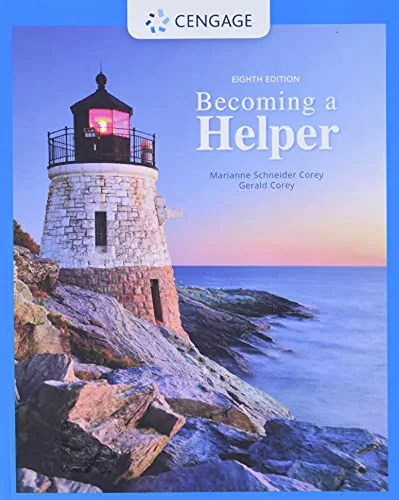
Becoming a Helper, 8th Edition, introduces the personal and professional work involved in counseling and human services. Marianne Schneider Corey and Gerald Corey combine self-reflection with discussion of helping relationships, ethics, cultural differences, and occupational stress. Beginning students and prospective helpers can explore both practical skills and their reasons for entering the field.
Inside this title
Self-reflection on motives, values, and assumptions about helping
Current listed price $28.99Regular price $96.00Digital ebook
Choosing a helping profession involves examining personal motives as well as learning professional methods. The Coreys invite readers to consider the experiences, values, assumptions, and limitations they bring to relationships with clients. Reflective exercises and case discussions make self-awareness an ongoing part of the learning process.
The text follows the helping relationship through rapport, assessment, goal setting, intervention, and closure. Ethical questions, confidentiality, informed consent, boundaries, and work with diverse populations are considered alongside the personal pressures of helping. Burnout, compassion fatigue, and self-care broaden the discussion beyond client contact. The eighth edition serves introductory counseling, social work, psychology, and human services courses, as well as readers considering a career transition.
Study guide included
Inside Becoming a Helper, 8th Edition.
Choosing to help others is a personal decision as much as a professional one. The Coreys ask readers to examine their own motives, values, and limits before learning the skills, then follow the helping relationship from first contact through assessment, goal setting, and a considered ending.
The eighth edition introduces the personal and professional dimensions of work in counselling and human services. Readers are invited to look at the experiences, values, and assumptions they bring to relationships with clients, with reflective exercises and case discussion making self-awareness part of the learning rather than a preliminary. The text then follows the helping relationship through rapport, assessment, goal setting, intervention, and closure. Ethical questions, confidentiality, informed consent, and boundaries are treated alongside work with diverse populations. Burnout, compassion fatigue, and self-care extend the discussion past client contact, acknowledging the cost of sustained caring. It serves introductory courses and readers considering a career change.
Why you want to help
The book begins with motive. Prospective helpers are asked to examine what draws them to the work, including needs of their own that might shape how they respond to clients. This is not a test to pass but a continuing form of honesty, because unexamined reasons can quietly influence boundaries, expectations, and the satisfaction a helper takes from being needed.
Examine what draws you to helping
Notice needs that shape responses
Keep motive under review
Topic 1
Stages of the relationship
The helping relationship is followed from initial contact through rapport, assessment, goal setting, intervention, and closure. Treating these as stages gives both helper and client a sense of direction and makes endings part of the work rather than a failure. Each stage carries its own tasks, and skipping ahead too quickly can leave the relationship without a shared purpose.
Follow the relationship from contact
Give the work a direction
Treat endings as part of helping
Topic 2
Ethics, consent, and boundaries
Ethical responsibilities are woven through the practical chapters. Confidentiality, informed consent, and boundaries are presented as decisions that arise in ordinary sessions rather than abstract rules learned once. The Coreys connect these questions to the power a helper holds, encouraging readers to think about how trust is earned and what happens when it is strained.
Treat ethics as everyday decisions
Recognise the helper's power
Think about earning trust
Topic 3
Working across cultural difference
Cultural difference is treated as central to competent helping rather than a special topic. The text asks readers to consider how their own assumptions about family, communication, and wellbeing may not fit a client's world. Attention to diverse populations runs alongside the ethical material, since good intentions do not by themselves ensure that a helper understands the person in front of them.
Examine your own cultural assumptions
Avoid assuming shared norms
Keep learning about clients
Topic 4
The cost of caring
Burnout and compassion fatigue are described as occupational realities rather than personal failings. Sustained exposure to others' difficulty can diminish energy, empathy, and judgment, and the book names these effects so that helpers can recognise them in themselves and in colleagues. Naming the risk is a step toward responding to it rather than treating exhaustion as a private weakness.
Name burnout as occupational
Watch for diminished empathy
Respond rather than self-blame
Topic 5
Self-care as a practice
Self-care is framed as part of professional competence, not an indulgence. The book connects the helper's own wellbeing with the quality of care they can offer, and it treats rest, support, and limits as conditions for sustainable work. This reframing makes self-care something a practitioner builds into their life deliberately rather than something that happens if time allows.
Build care into professional life
Set limits that can be sustained
Seek support from colleagues
Topic 6
Topic map
Motives and Self-AwarenessTopic 1
Rapport and AssessmentTopic 2
Goals, Intervention, and ClosureTopic 3
Ethics, Consent, and BoundariesTopic 4
Cultural Difference in HelpingTopic 5
Stress, Burnout, and Self-CareTopic 6
Key takeaways
Knowing why you want to help is part of competence, because unexamined motives steer boundaries and expectations.
The helping relationship has a shape, and a planned ending belongs to good practice rather than signaling failure.
Burnout is an occupational hazard of caring work, which makes self-care a professional responsibility.
Beginning students in counselling, social work, psychology, and human services, plus career changers who want to test their motives and learn the ethical and relational basics of helping.
Topics covered
helping relationship
human services
counseling ethics
cultural differences
compassion fatigue
professional boundaries
informed consent
career exploration
Other editions of this title.
Compare editions, prices, and book details before you choose.
Edition, audience, and study-guide details at a glance.
What is Becoming a Helper, 8th Edition about?
Becoming a Helper, 8th Edition, introduces the personal and professional work involved in counseling and human services. Marianne Schneider Corey and Gerald Corey combine self-reflection with discussion of helping relationships, ethics, cultural differences, and occupational stress. Beginning students and prospective helpers can explore both practical skills and their reasons for entering the field.
Which edition of Becoming a Helper, 8th Edition is this?
This listing is for the 8th edition. Check the title, ISBN, and book details above before ordering, especially if your course or reading list names a specific edition.
Who is Becoming a Helper, 8th Edition for?
Beginning students in counselling, social work, psychology, and human services, plus career changers who want to test their motives and learn the ethical and relational basics of helping.
Does this page include a study guide?
Yes. This page includes an original study guide with six thematic sections, key takeaways, and a topic map for structured reading.