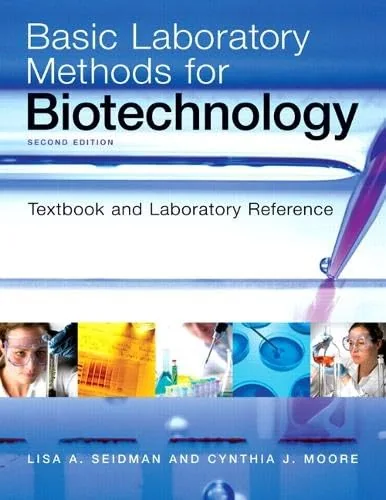
Basic Laboratory Methods for Biotechnology: Textbook and Laboratory Reference, 2nd Edition
By Lisa A. Seidman, Cynthia J. Moore
About this ebook
Basic Laboratory Methods for Biotechnology, 2nd Edition introduces the measurements, procedures, and working practices used in biotechnology laboratories. Lisa A. Seidman and Cynthia J. Moore combine explanations with protocols and reference material. Students, laboratory technicians, and instructors can use it to study molecular biology methods, microbiology, protein analysis, and quality systems.
Inside this title
Measurements, laboratory calculations, safety practices, and quality documentation
Current listed price $8.00Regular price $24.00Digital ebook
The textbook places laboratory technique within the routines that support reproducible work: safety, documentation, calculations, and quality practices. Foundational sections address measurement and unit conversions before introducing procedures used in molecular biology, microbiology, and cell culture. Step-by-step methods are accompanied by explanations and troubleshooting guidance.
Coverage includes DNA extraction, PCR, electrophoresis, aseptic technique, media preparation, chromatography, and spectrophotometry. Quality systems and regulatory concepts connect individual techniques with the organization of a biotechnology laboratory. Reference appendices supply data and conversion information for consultation during study. The combination of instructional discussion and procedural material supports both classroom learning and review of the laboratory methods described in this edition.
Study guide included
Inside Basic Laboratory Methods for Biotechnology: Textbook and Laboratory Reference, 2nd Edition.
A study companion to Seidman and Moore's laboratory textbook, following the working practices that make biotechnology results reproducible: safety, documentation, measurement, and quality systems, then the core molecular, microbiological, and protein methods. It supports students and technicians who need both the reasoning behind a procedure and a way to review it.
The textbook places technique inside the routines of a functioning laboratory. Foundational sections address measurement, unit conversion, safety, and documentation before moving to step-by-step methods with explanations and troubleshooting guidance. Procedures include DNA extraction, PCR, electrophoresis, aseptic technique, media preparation, chromatography, and spectrophotometry. Quality systems and regulatory concepts connect individual techniques to laboratory organization, and reference appendices supply data for consultation. This guide groups that material into six themes with a topic map for study, revision, and consultation at the bench.
Laboratory Safety and Documentation
Before any procedure, the laboratory depends on practices that keep work safe and traceable. Safety considerations and documentation habits are presented as part of technique rather than as paperwork around it. Readers are asked to see records as the means by which a result can be repeated, checked, and trusted by someone who was not present.
Safety practices embedded in technique
Records that make work traceable
Documentation supporting repeatability of results
Habits treated as part of method
Book description - safety, documentation, and quality practices
Measurement, Units, and Calculations
Measurement and unit conversion form the quantitative base for laboratory work. The text treats these as skills that determine whether a protocol produces a meaningful result, covering the calculations that precede and accompany procedures. Reviewing them separately helps readers diagnose errors that appear in a procedure but originate in a concentration, dilution, or conversion mistake.
Unit conversion as a core skill
Concentrations and dilution calculations
Quantitative base for protocols
Tracing errors to calculation steps
Book description - measurement and unit conversions
Molecular Biology Laboratory Techniques
DNA extraction, PCR, and electrophoresis are presented with explanations and troubleshooting guidance rather than as recipes alone. The theme follows the logic of preparing a sample, amplifying or separating material, and interpreting what the result shows. Readers are encouraged to connect each step to the purpose it serves in the overall method.
DNA extraction and sample preparation
PCR amplification and analysis steps
Electrophoresis separation and reading
Troubleshooting rather than following recipes
Book description - DNA extraction, PCR, and electrophoresis
Microbiology and Aseptic Technique
Aseptic technique and media preparation introduce the microbiological side of laboratory practice. The emphasis falls on preventing contamination through working habits and on preparing materials correctly so that observations reflect the organism rather than the handling. These skills underpin later work and are presented as procedural discipline rather than background knowledge.
Aseptic habits that prevent contamination
Media preparation and handling
Observations reflecting organism not handling
Procedural discipline in routine work
Book description - aseptic technique and media preparation
Protein Analysis and Cell Culture
Protein analysis extends the laboratory repertoire to separation and measurement of proteins, with chromatography and spectrophotometry among the methods discussed. The theme connects sample handling with the choice of analytical approach and with reading the output. Cell culture appears alongside this material as another area where technique and interpretation are tied together.
Chromatography for protein separation
Spectrophotometry for protein measurement
Choosing an analytical approach
Cell culture technique and interpretation
Book description - chromatography, spectrophotometry, and cell culture
Quality Systems and Reference Data
Quality systems and regulatory concepts place individual techniques within a laboratory's organization. The final theme also covers reference appendices, which gather data and conversion information for consultation during study and work. Together they remind readers that reproducibility depends on systems as much as on skilled hands at the bench.
Quality systems framing laboratory organization
Regulatory concepts for laboratory practice
Reference appendices for data lookup
Systems supporting reproducible results
Book description - quality systems and reference appendices
Topic map
Laboratory Safety and DocumentationTopic 1
Measurement and Unit ConversionsTopic 2
DNA Extraction and PCRTopic 3
Electrophoresis and Separation MethodsTopic 4
Microbiology and Aseptic TechniqueTopic 5
Protein Analysis and Cell CultureTopic 6
Quality Systems and Reference DataTopic 7
Key takeaways
Good laboratory records are what let another person repeat and verify a result.
Many apparent procedural failures trace back to measurement, dilution, or conversion errors.
Quality systems turn individual techniques into a laboratory that produces comparable results.
Biotechnology students, laboratory technicians, and instructors who need a review of core methods alongside the safety, calculation, documentation, and quality practices that surround them every day.
Topics covered
biotechnology lab methods
laboratory safety
molecular biology protocols
aseptic technique
quality systems
protein analysis
PCR and electrophoresis
lab calculations
Questions about this ebook.
Edition, audience, and study-guide details at a glance.
What is Basic Laboratory Methods for Biotechnology: Textbook and Laboratory Reference, 2nd Edition about?
Basic Laboratory Methods for Biotechnology, 2nd Edition introduces the measurements, procedures, and working practices used in biotechnology laboratories. Lisa A. Seidman and Cynthia J. Moore combine explanations with protocols and reference material. Students, laboratory technicians, and instructors can use it to study molecular biology methods, microbiology, protein analysis, and quality systems.
Which edition of Basic Laboratory Methods for Biotechnology: Textbook and Laboratory Reference, 2nd Edition is this?
This listing is for the 2nd edition. Check the title, ISBN, and book details above before ordering, especially if your course or reading list names a specific edition.
Who is Basic Laboratory Methods for Biotechnology: Textbook and Laboratory Reference, 2nd Edition for?
Biotechnology students, laboratory technicians, and instructors who need a review of core methods alongside the safety, calculation, documentation, and quality practices that surround them every day.
Does this page include a study guide?
Yes. This page includes an original study guide with six thematic sections, key takeaways, and a topic map for structured reading.