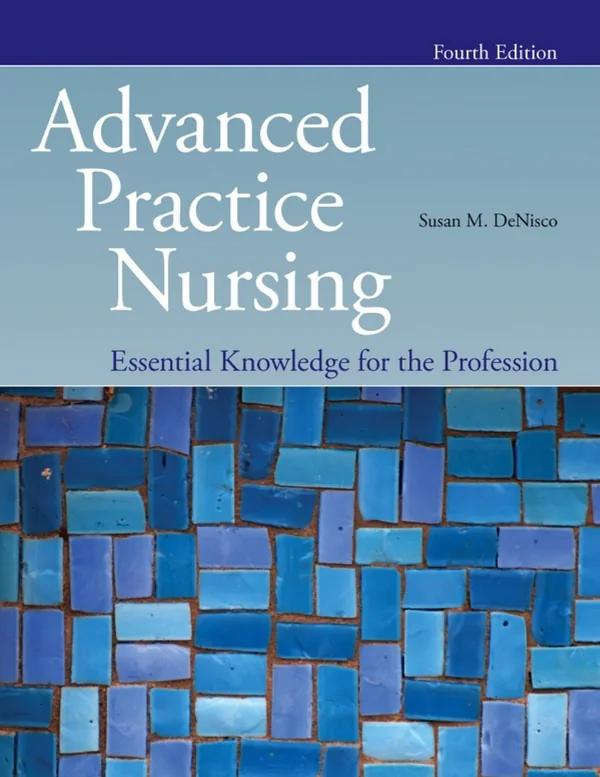
Advanced Practice Nursing: Essential Knowledge for the Profession, Fourth Edition, addresses the professional foundations of advanced nursing roles. Graduate nursing students can study role transition, policy, ethics, scholarship, collaboration, and systems leadership, with cases and discussion questions connecting these subjects to population health, cultural considerations, and organizational change.
Inside this title
Professional role transition from registered nurse to APRN
Current listed price $31.99Regular price $53.00Digital ebook
Moving into advanced practice involves professional and organizational questions as well as clinical knowledge. This text examines role development, ethical reasoning, healthcare policy, and advocacy, connecting individual responsibilities with the systems in which nurses work. Its progression leads from foundational concepts toward leadership and the application of evidence in practice.
Clinical scholarship, interprofessional collaboration, health promotion, and health equity broaden the account of advanced nursing work. Learning objectives, case studies, and discussion questions support graduate coursework and reflection on professional situations. The fourth edition is intended for master's and DNP students, using the educational and role frameworks discussed in that edition to organize the knowledge associated with advanced practice.
Study guide included
Inside Advanced Practice Nursing: Essential Knowledge for the Profession, 4th Edition.
Advanced Practice Nursing: Essential Knowledge for the Profession, 4th Edition, addresses the professional foundations of advanced nursing roles. Susan M. DeNisco and contributors prepare graduate students for role transition through policy, ethics, scholarship, collaboration, quality and systems leadership, with cases that tie each topic to population health and organizational change.
Six parts move from professional roles and doctoral preparation to delivery, policy, economics, quality and information systems, then nursing science, evidence and clinical scholarship, culture and ethics, and finally mentorship and role transition. The collection gives graduate learners a shared foundation across specialties and shows how decisions about evidence, resources and relationships converge on the same outcomes. Cases and discussion questions link each topic to population health, cultural context and organizational change, so theory never sits far from the work of leading a team.
Roles, preparation and collaboration
Opening chapters trace the growth of advanced roles and examine nurse practitioner education, competencies and the DNP degree, distinguishing research-focused from practice-focused doctoral preparation. Clinical work, education, administration, public health, entrepreneurship and informatics each offer a route to influencing outcomes, and the knowledge required shifts with the role. Organizational change and interprofessional collaboration follow, since many results depend on coordinated work across professions.
Connect preparation to the work
Clarify roles across the team
Plan implementation, not just the idea
Part 1 · Professional roles for advanced practice
Delivery, policy and economics
Delivery chapters cover U.S. insurance and managed care alongside international comparisons, showing how coverage, payment and service organization decide where care is obtainable and what organizations can sustain. Legislation and regulation are distinguished as routes that structure practice. Budgeting, cost accounting and hospital economics give practitioners language for staff time, technology and capacity, where cost and outcome must be weighed together.
Follow access through the system
Describe the resource decision
Weigh cost against access and outcome
Part 2 · Healthcare delivery and health policy for advanced practice
Quality, safety and information
Outcomes, patient value, safety and cost-effectiveness are treated as related dimensions, with process measures showing whether work happened and outcome measures showing the result. Burden and unintended effects reveal what a single indicator hides. Electronic records, standardized terminology, information exchange and large data sets support coordination, but only when information quality, access, implementation and confidentiality are managed within the actual workflow.
Define quality through measurable outcomes
Watch for unintended effects
Fit technology to the workflow
Part 3 · Quality, safety and information systems
Evidence and clinical scholarship
Research, quality improvement, evaluation and clinical scholarship all improve practice but answer different questions. A literature search locates existing evidence, and critical appraisal asks how a result was produced and whether it fits the population and setting. Evidence-based practice combines research, expertise and patient preference, with shared decision making making preference visible when evidence permits several options, and implementation depending on local fit.
Distinguish the forms of inquiry
Appraise before adopting
Translate findings with patients and colleagues
Part 4 · Theoretical foundations, research and evidence-based practice
Culture, equity and ethical leadership
Population and culture chapters tie health to belief, living conditions and service access, since geography, work, housing and insurance change the options a person can use. Cultural humility asks practitioners to check their own assumptions, and community partnership surfaces priorities absent from clinic records. Ethical reasoning covers consent, capacity, truthfulness, privacy and confidentiality, including what technology should collect, disclose and retain.
Investigate access before judging participation
Make ethical reasoning explicit
Name where decision authority belongs
Part 5 · Race, culture, ethics and advocacy
Mentorship and role transition
Career planning runs through reflection, self-appraisal, portfolios and professional communication, with a portfolio linking an experience to a competency and to evidence of a result. This helps a learner state what they can already do and what still needs developing, and certification sits inside that broader process. Mentorship supplies feedback, realistic goals and a place to discuss difficult transitions, while leadership grows through practice.
Make growth visible in a portfolio
Pair objectives with real projects
Use mentorship to review progress
Part 6 · Leadership and role transition
Chapter and section map
Professional roles for advanced practicePart 1
Healthcare delivery and health policyPart 2
Quality, safety and information systemsPart 3
Theoretical foundations, research and evidence-based practicePart 4
Race, culture, ethics and advocacyPart 5
Leadership and role transitionPart 6
Key takeaways
Define an outcome, a process measure and a possible unintended effect before evaluating change.
Include patient preference and access conditions when translating evidence into local workflow.
Use a portfolio to connect a project, a competency and evidence that feedback improved the work.
Graduate nursing students in advanced practice programs, and new advanced practice nurses navigating role transition, policy and systems leadership across specialties and varied care organizations.
Topics covered
advanced practice nursing
professional roles
health policy
quality and safety
evidence-based practice
cultural humility
nursing ethics
role transition
Questions about this ebook.
Edition, audience, and study-guide details at a glance.
What is Advanced Practice Nursing: Essential Knowledge for the Profession, 4th Edition about?
Advanced Practice Nursing: Essential Knowledge for the Profession, Fourth Edition, addresses the professional foundations of advanced nursing roles. Graduate nursing students can study role transition, policy, ethics, scholarship, collaboration, and systems leadership, with cases and discussion questions connecting these subjects to population health, cultural considerations, and organizational change.
Which edition of Advanced Practice Nursing: Essential Knowledge for the Profession, 4th Edition is this?
This listing is for the 4th edition. Check the title, ISBN, and book details above before ordering, especially if your course or reading list names a specific edition.
Who is Advanced Practice Nursing: Essential Knowledge for the Profession, 4th Edition for?
Graduate nursing students in advanced practice programs, and new advanced practice nurses navigating role transition, policy and systems leadership across specialties and varied care organizations.
Does this page include a study guide?
Yes. This page includes an original study guide with six thematic sections, key takeaways, and a chapter and section map for structured reading.