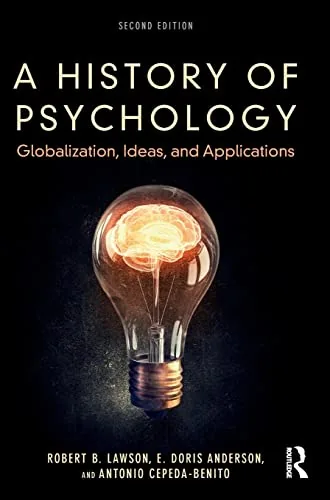
A History of Psychology: Globalization, Ideas, and Applications, 2nd Edition
By Robert B. Lawson, E. Doris Anderson, Antonio Cepeda-Benito
About this ebook
A History of Psychology: Globalization, Ideas, and Applications, 2nd Edition examines psychological thought across cultures and historical settings. Lawson, Anderson, and Cepeda-Benito connect philosophical origins, biological inquiry, professional development, and major schools while including women and minority contributors, offering psychology students a wider perspective on the discipline's history.
Inside this title
Psychological ideas examined across global cultures and historical contexts
Current listed price $54.99Regular price $184.00Digital ebook
The history begins with questions about mind and behavior in ancient traditions, including Greek, Indian, and Chinese thought. Subsequent developments connect philosophy with physiology and the formation of psychology as a modern field. Social, political, and economic settings help explain why particular ideas and applications took shape.
The authors follow schools such as behaviorism, Gestalt psychology, psychoanalysis, humanism, and cognitive psychology while bringing attention to contributors often omitted from narrower histories. The emergence of clinical practice and the work of women and minority psychologists extend the account of professional development. Students and educators can use the second edition to compare established historical narratives with a more global, context-sensitive treatment of psychological ideas.
Study guide included
Inside A History of Psychology: Globalization, Ideas, and Applications, 2nd Edition.
Lawson, Anderson, and Cepeda-Benito widen the history of psychology beyond a European story. Ancient traditions, philosophical origins, biological inquiry, and the growth of professions appear together, with women and minority contributors given a place in the narrative rather than an appendix.
The account begins with questions about mind and behavior in ancient traditions, including Greek, Indian, and Chinese thought, before connecting philosophy with physiology and the formation of psychology as a modern field. Social, political, and economic conditions help explain why particular ideas and applications took hold where they did. The authors then follow behaviorism, Gestalt psychology, psychoanalysis, humanism, and cognitive psychology while recovering contributors often left out of narrower histories. Clinical practice and professional development extend the story into the present, and the global frame lets students compare familiar narratives with a more context-sensitive treatment of psychological ideas.
Psychological thought across cultures
The history opens before the modern discipline, examining how different traditions asked about mind and conduct. Greek, Indian, and Chinese thought appear as parallel sources of psychological questioning rather than as background to a single lineage. This framing unsettles the assumption that psychology's history begins in one place and spreads outward.
Greek, Indian, and Chinese sources
Parallel traditions of inquiry
Questioning a single origin story
Topic 1
Philosophy, biology, and the new field
The transition from philosophical speculation to biological and experimental investigation is traced through the questions researchers pursued and the institutions that supported them. Physiology gave the emerging field methods, while philosophy left it a set of unresolved problems. The chapter shows how the two streams combined to make a separate discipline possible.
Philosophical problems carried forward
Physiology supplies the method
Institutions support a new field
Topic 2
Major schools and their claims
Behaviorism, Gestalt psychology, psychoanalysis, humanism, and cognitive psychology each defined psychology differently. The authors present their central claims and the disagreements among them without reducing the field to a single victorious tradition. Seeing the schools side by side makes clear that the discipline's identity has been contested throughout.
Behaviorism and observable conduct
Gestalt, psychoanalytic, humanist views
Cognitive psychology's return to mind
Topic 3
Recovering contributors often left out
Women and minority psychologists receive sustained attention as contributors to theory, research, and practice. The chapter examines why their work was overlooked and what changes when it is included. This is not decoration; adding these figures alters the account of how ideas developed and who did the developing.
Women in psychological research
Minority contributions to the field
Why omissions distorted the story
Topic 4
Context shapes what takes hold
Social, political, and economic conditions are treated as forces that shape which ideas gain influence and which applications are pursued. The book connects intellectual history with the settings in which psychologists worked, arguing that theories do not spread on merit alone. This context-sensitive approach is the book's main departure from older histories.
Social settings and idea adoption
Political and economic pressures
Applications shaped by circumstance
Topic 5
Applications and the profession
The growth of clinical practice and professional organization is part of the history, not a footnote to theory. The authors trace how psychological knowledge moved into applied settings and how the occupation took shape. Globalization ties the account together, showing a discipline developing unevenly across regions and traditions.
Clinical practice takes shape
Professional organization takes shape
Global and uneven development
Topic 6-7
Topic map
Ancient and Global Traditions of MindTopic 1
Philosophy Meets PhysiologyTopic 2
Schools of Psychological ThoughtTopic 3
Women and Minority ContributorsTopic 4
Social Context and ApplicationsTopic 5
Clinical Practice and Professional GrowthTopic 6
Globalization of the DisciplineTopic 7
Key takeaways
Psychology's history is plural, with roots in several traditions rather than a single European line.
Including women and minority psychologists changes the explanation of how key ideas developed.
Social and economic conditions shape which theories gain influence, so intellectual history needs context.
Psychology students and educators who want a global, inclusive survey, plus general readers comparing standard histories with an account that foregrounds culture, context, and overlooked contributors.
Topics covered
global history of psychology
ancient traditions
schools of psychology
women psychologists
minority contributors
clinical practice history
professional development
contextual history
Questions about this ebook.
Edition, audience, and study-guide details at a glance.
What is A History of Psychology: Globalization, Ideas, and Applications, 2nd Edition about?
A History of Psychology: Globalization, Ideas, and Applications, 2nd Edition examines psychological thought across cultures and historical settings. Lawson, Anderson, and Cepeda-Benito connect philosophical origins, biological inquiry, professional development, and major schools while including women and minority contributors, offering psychology students a wider perspective on the discipline's history.
Which edition of A History of Psychology: Globalization, Ideas, and Applications, 2nd Edition is this?
This listing is for the 2nd edition. Check the title, ISBN, and book details above before ordering, especially if your course or reading list names a specific edition.
Who is A History of Psychology: Globalization, Ideas, and Applications, 2nd Edition for?
Psychology students and educators who want a global, inclusive survey, plus general readers comparing standard histories with an account that foregrounds culture, context, and overlooked contributors.
Does this page include a study guide?
Yes. This page includes an original study guide with six thematic sections, key takeaways, and a topic map for structured reading.